


How to sell a house in USA fast 2026 starts with 3 decisions: set a price buyers can defend, prepare the property for immediate showings, and launch concentrated marketing during the first 7 days. Most owners can prepare a standard home in 7–21 days, while a rushed sale may begin within 72 hours when the property needs little work, as noted by Baltimore Chronicle.
A fast sale does not require accepting the first low offer. The better strategy is to remove the problems that delay buyers: unrealistic pricing, poor photographs, visible defects, restricted showing hours, and uncertain closing terms.
Key takeaways
- Price against recent local sales, not your mortgage balance or an automated estimate alone.
- Spend money on visible repairs, cleaning, lighting, and curb appeal before considering major renovations.
- Give buyers easy access, strong photographs, complete disclosures, and clear deadlines during the launch period.
What you need before listing the property
Collect the documents and services before photographs are taken. Missing paperwork can slow the listing, weaken negotiations, or create problems after an offer arrives.
- Mortgage payoff information and lender contact details
- Property deed, survey, title documents, and prior closing records
- Receipts and permits for additions, roof work, HVAC replacement, or electrical upgrades
- State and local seller disclosure forms
- Property tax, HOA, utility, insurance, and maintenance records
- A local comparative market analysis from at least 2 agents
- A repair, cleaning, staging, photography, and moving budget
- Several hours for showings during evenings and weekends
Disclosure requirements vary by state. California uses extensive transfer disclosure documents, while Texas, Florida, Maryland, and New York apply different forms and exemptions. Owners should obtain the current forms from a licensed local agent, attorney, or state real estate regulator.
Check permits before marketing converted garages, finished basements, additional bedrooms, or accessory dwelling units. An unpermitted improvement may affect the appraisal, insurance, financing, or buyer confidence.
Calculate the lowest acceptable net proceeds before choosing a list price. Include the mortgage payoff, negotiated agent compensation, transfer taxes, title charges, repairs, concessions, moving costs, and any attorney fee.
Readers comparing professional representation can review Baltimore Chronicle’s guide on how to find a real estate agent in the USA. The right listing agent should understand local pricing, digital marketing, buyer objections, and contract deadlines.
Step 1: Price the home for the first 14 days
Study closed sales from the previous 60–90 days, active competition, pending listings, price reductions, and expired listings. Compare homes with similar square footage, lot size, condition, school district, parking, and renovation level.
This matters because the first days usually bring the strongest attention from active buyers. A listing that looks overpriced can be ignored until a reduction makes buyers question what is wrong.
Avoid adding every dollar spent on renovations to the price. A $30,000 kitchen project does not automatically increase market value by $30,000.
The fastest defensible price is usually close enough to recent sales to attract qualified buyers, yet high enough to leave room for normal negotiation.
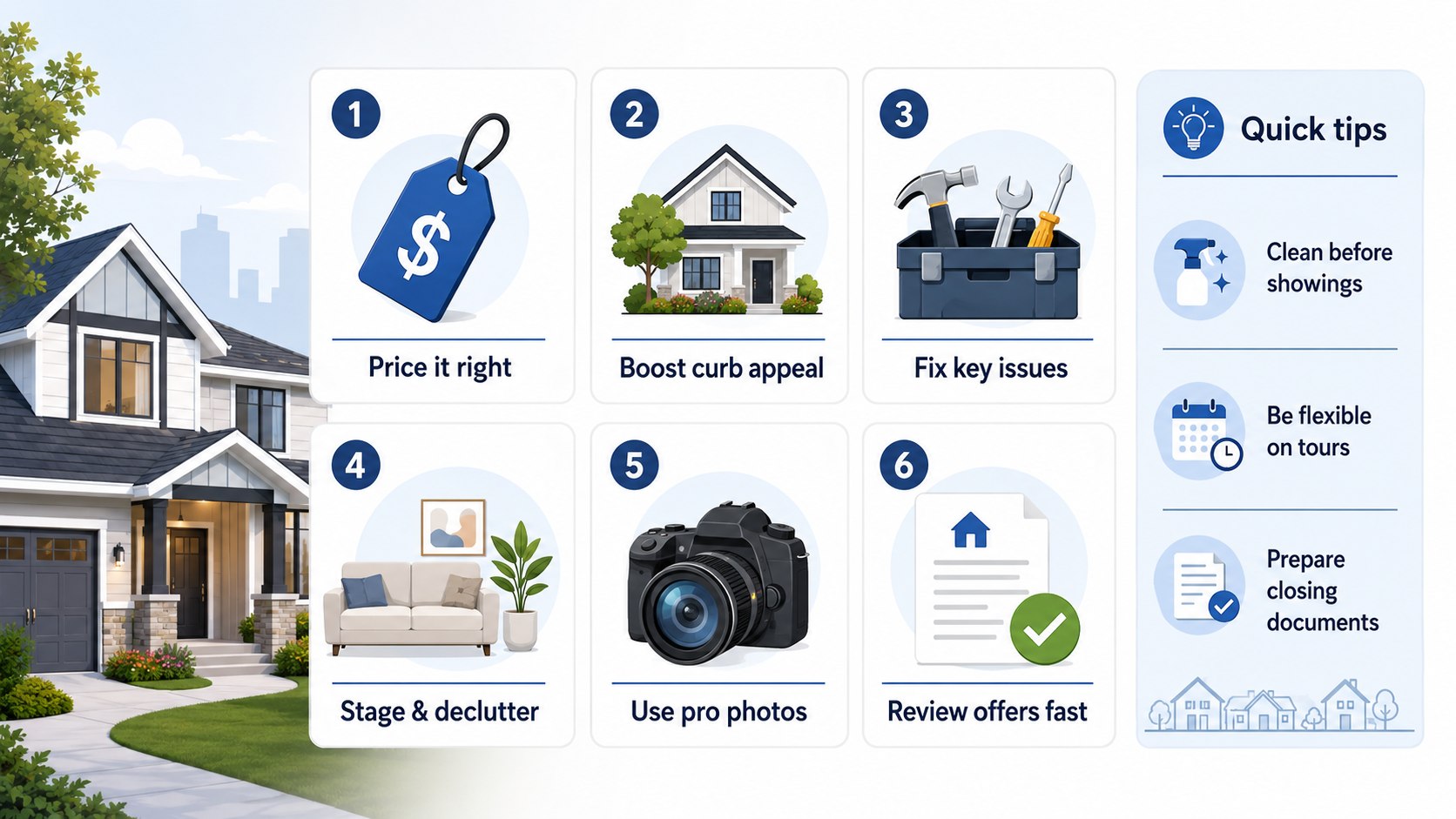
Step 2: Fix the defects buyers notice immediately
Walk through the house as a critical buyer would. Repair leaking faucets, loose railings, damaged screens, broken switches, stained ceilings, missing trim, sticking doors, and visible drywall damage.
These fixes matter because several small defects can make buyers suspect neglected plumbing, roofing, or electrical systems. That impression often produces lower offers or larger inspection requests.
Avoid starting a full remodel unless comparable sales clearly support the expense. Kitchens, bathrooms, additions, and structural work can introduce permit delays, contractor shortages, and new defects.
| Preparation item | Typical 2026 planning range | Best use |
|---|---|---|
| Deep cleaning | $250–$800+ | Nearly every occupied or recently vacant home |
| Interior touch-up painting | $500–$3,000+ | Scuffed walls, dark colors, patched areas |
| Basic landscaping | $150–$1,500+ | Overgrown yards and weak curb appeal |
| Pre-listing inspection | $300–$700+ | Older homes or sellers seeking fewer surprises |
| Professional photography | $150–$600+ | Most listings competing online |
| Partial staging | $500–$2,500+ | Empty rooms or difficult layouts |
Prices vary by city, house size, contractor availability, and service level. A 900 sq ft home in Ohio will not carry the same preparation budget as a 3,000 sq ft property in California.
Request written scopes from contractors rather than relying on verbal estimates. Confirm whether materials, disposal, permits, and cleanup are included.
Focus first on safety, water intrusion, odors, lighting, cleanliness, and obvious damage. Buyers notice these items before premium appliances or decorative upgrades.
Keep invoices and warranties for completed work. Organized records can support the asking price and answer questions during inspection negotiations.
Leave cosmetic imperfections when repairing them would delay the listing without materially changing the likely sale price.
Step 3: Remove clutter and stage for online buyers
Pack personal collections, oversized furniture, excess kitchen equipment, crowded closet contents, pet supplies, and family photographs. Each room should show a clear function and an easy walking path.
Preparing a house for sale matters online because buyers judge space through photographs before scheduling a tour. Crowded rooms appear smaller, even when the listed square footage is accurate.
Avoid hiding belongings in the garage or every closet. Buyers open storage areas and may assume the house lacks usable space.
- Clear countertops, floors, windowsills, and bathroom surfaces.
- Remove roughly one-third of visible closet contents.
- Use matching bulbs with bright, neutral light.
- Clean windows, vents, baseboards, appliances, and cabinet fronts.
- Place furniture to show room dimensions and natural traffic flow.
- Store medications, financial documents, jewelry, firearms, and spare keys securely.
Finish this work before the photographer arrives. Do not expect image editing to correct clutter, poor lighting, dirty surfaces, or an unclear room layout.
Keep the staged arrangement consistent during the launch week. Buyers should see the property shown in the listing photographs.
Create a daily 20-minute reset routine for beds, dishes, laundry, floors, lights, and pet areas. This makes short-notice showings less disruptive.
Vacant homes may need limited furniture in the living room, primary bedroom, and dining area. Those rooms help buyers understand scale and circulation.
Do not use heavily scented sprays to cover odors. Strong fragrance may cause buyers to suspect mold, smoke, pets, or moisture.
Step 4: Build a listing that answers buyer questions
Use professional photographs, an accurate floor plan, room dimensions, a concise property description, and a complete feature list. Include the roof age, HVAC information, parking arrangement, storage, renovations, outdoor space, and major utility details.
Strong marketing supports a quick home sale because qualified buyers can evaluate the property before visiting. It also reduces repetitive questions during the busiest listing days.
Avoid exaggerated phrases such as “completely renovated” when older systems or unfinished work remain. Accuracy protects trust and reduces disputes.
A listing should sell the home’s verifiable advantages without hiding limitations that a buyer, inspector, appraiser, or title company will later discover.
Housing advertisements must comply with federal, state, and local fair housing rules. Review the HUD Fair Housing Act overview before publishing language that could imply a preference for certain occupants.
Step 5: Launch the listing with concentrated exposure
Schedule photography, MLS publication, portal syndication, agent outreach, open houses, and showing availability as one coordinated launch. Thursday or Friday publication may support weekend traffic, although local patterns should guide timing.
This matters because scattered marketing wastes the period when a new listing receives the most attention. Buyers searching through Zillow, Realtor.com, Redfin, brokerage feeds, and local MLS alerts often see new inventory quickly.
Avoid publishing unfinished photographs or activating the listing before the house is ready. The first impression cannot be fully recreated after weak images circulate.
Offer broad showing windows during the first weekend. A seller who requires 24-hour notice or rejects evening appointments may lose buyers with limited schedules.
Step 6: Compare offers by certainty, not price alone
Review the proposed price, financing, down payment, earnest money, appraisal terms, inspection rights, requested concessions, closing date, occupancy, and sale-of-home contingency. Ask the lender or agent to verify the buyer’s pre-approval.
The highest offer may deliver lower net proceeds or carry more cancellation risk. A slightly lower cash offer can sometimes close faster, but proof of funds and title readiness still require verification.
Avoid comparing only the headline price. Calculate estimated proceeds and identify every deadline that could reopen negotiations.
For insight into the buyer’s negotiation process, see how buyers negotiate a house price after inspection. Understanding those tactics helps sellers prepare documentation and set repair limits.
Step 7: Negotiate compensation and concessions clearly
Agent compensation is negotiable. Ask the listing broker to state the listing fee, services, cancellation conditions, marketing budget, and any proposed buyer-agent compensation in writing.
Following national real estate practice changes introduced in 2024, offers of buyer-broker compensation cannot be displayed through participating MLS systems. Sellers may still negotiate compensation or concessions outside the MLS, subject to written approval and applicable rules.
This matters because a concession can expand the buyer pool, while an unnecessary concession reduces the seller’s proceeds. Compare its cost with a direct price reduction.
Avoid assuming that one commission structure applies nationally. Brokerage agreements, customs, service models, and local market conditions differ.
Step 8: Control inspection, appraisal, and closing delays
Provide access to the attic, electrical panel, crawl space, HVAC equipment, water heater, garage, and utility shutoffs. Keep repair records, permits, warranties, and disclosure documents ready.
This step matters because delayed access creates additional visits and gives buyers more time to reconsider. Fast responses keep the contract moving toward appraisal, title review, and closing.
Avoid making informal repair promises by text. Contract amendments should describe the work, deadline, documentation, credit, or price adjustment clearly.
Before closing, verify the settlement statement, mortgage payoff, wire instructions, tax prorations, commissions, credits, transfer charges, and expected proceeds. Baltimore Chronicle’s guide to closing costs on a house explains the charges that may appear during settlement.

Troubleshooting a slow home sale
A listing that receives little activity usually has a pricing, presentation, access, or financing problem. Use showing data and buyer feedback rather than waiting without a defined response.
- No showings: compare the price and photographs with competing listings within the same school district and price bracket.
- Showings but no offers: investigate condition, odors, layout concerns, monthly HOA costs, insurance issues, or an obvious pricing gap.
- Repeated low offers: recalculate market value using recent closed and pending sales rather than active asking prices.
- Failed appraisal: provide relevant comparable sales, improvement records, permits, and factual corrections through the permitted reconsideration process.
- Buyer withdraws: document the reason, review contract rights, address any new disclosure issue, and relaunch without hiding material facts.
Make one meaningful correction instead of several cosmetic changes. A small price reduction may not help when the listing remains above a major search threshold.
Replace weak photographs when traffic is high but appointments are low. Improve access when buyers cannot schedule practical viewing times.
Review recurring feedback with the agent after every 5–10 showings. Comments about darkness, odors, noise, deferred maintenance, or layout should not be dismissed automatically.
Recalculate net proceeds before offering large credits. A credit may produce a cleaner agreement than completing rushed work, but its cost must remain acceptable.
Withdraw and relaunch only after checking local MLS rules and days-on-market treatment. A cosmetic reset cannot replace a corrected price or resolved property issue.
FAQ
What is the fastest realistic way to sell a house in 2026?
Price it from recent local sales, complete visible repairs, use professional media, and allow frequent showings. A cash buyer may close faster, but sellers should compare the reduced price against the value of speed and certainty.
Should I sell to an iBuyer or cash-home company?
Companies such as Opendoor and local investors may offer convenience and shorter timelines. Compare the written offer, service charges, repair deductions, closing flexibility, and expected open-market proceeds before signing.
How much does it cost to sell a house in the USA?
Total costs depend on the state and contract. Common charges include brokerage compensation, transfer taxes, title or escrow fees, attorney costs, repairs, concessions, mortgage payoff charges, staging, and moving expenses.
Do I need to pay tax after selling my primary home?
Qualifying taxpayers may exclude up to $250,000 of gain, or up to $500,000 for certain married couples filing jointly. Ownership, use, timing, and reporting rules apply, so review IRS Topic No. 701.
Should I get a home inspection before listing?
A pre-listing inspection can reveal defects early and support repair planning. It may also create additional disclosure obligations, so discuss the local consequences with an agent or real estate attorney.
Can I sell a house fast without a real estate agent?
Yes, but the owner must handle pricing, marketing, showings, disclosures, buyer screening, contracts, negotiations, title coordination, and legal deadlines. An attorney or title professional may still be required or advisable.
Earlier we wrote about Returning Amazon Orders at UPS Gets Confusing: How to Choose the Correct Drop-Off Method