

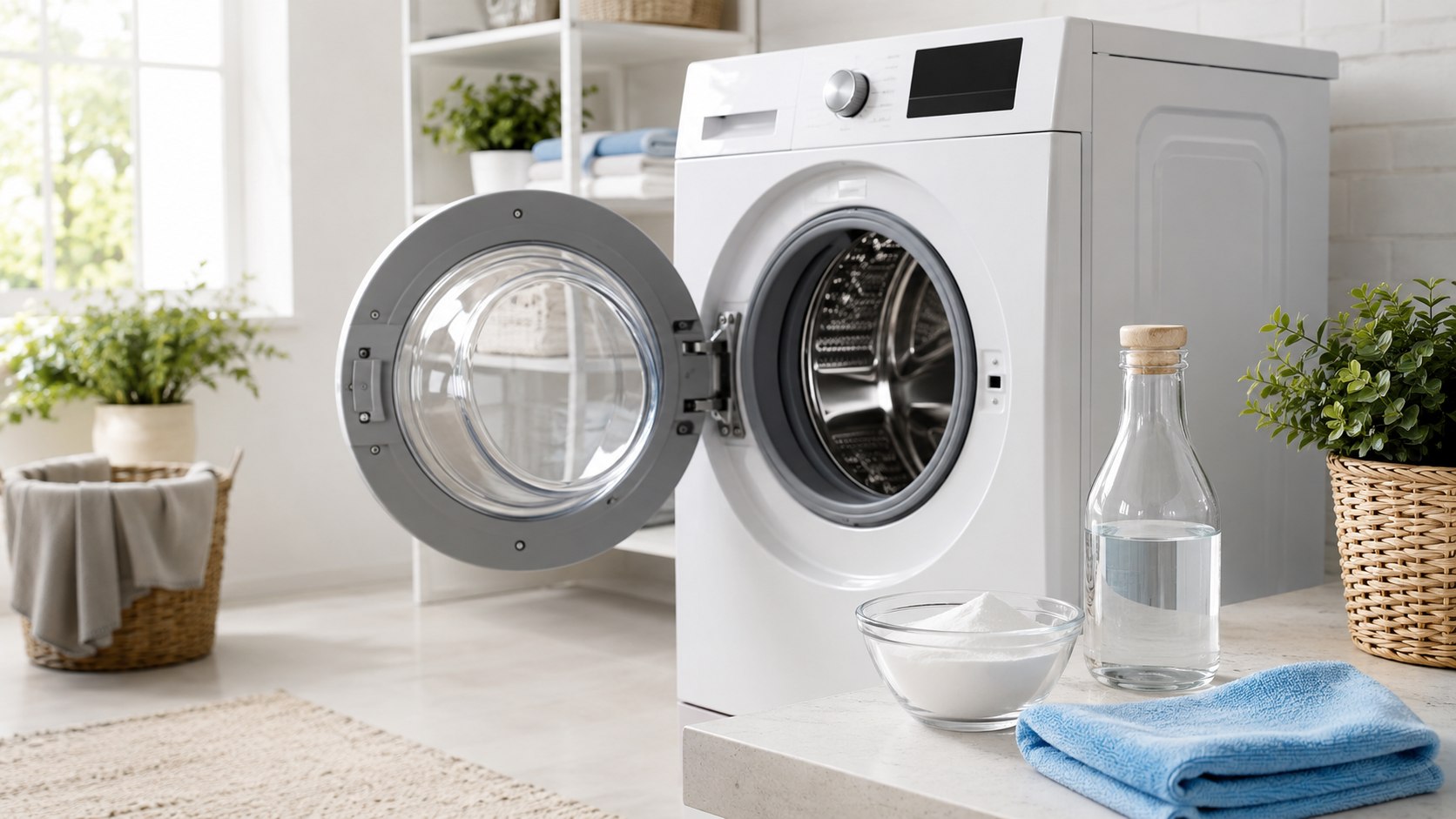
How to fix a washing machine that smells usually comes down to removing trapped moisture, detergent film, and debris from the gasket, dispenser, filter, and drum. Most odor problems take 45–90 minutes to address, although the washer’s cleaning cycle may run longer. Start by emptying the machine, wiping the door seal, cleaning removable parts, and running the manufacturer-approved maintenance cycle, as noted by Baltimore Chronicle.
A musty washer rarely needs an immediate repair. The odor usually develops because water remains behind a front-loader gasket, excessive detergent creates residue, or wet laundry sits inside the drum. A sewage, electrical, or burning-rubber smell requires different troubleshooting and may justify professional service.
Key takeaways
- Clean the gasket, dispenser, filter, and drum instead of masking the odor with fragrance.
- Use vinegar only when the appliance manual permits it, and never combine vinegar with chlorine bleach.
- Prevent recurring smells by measuring HE detergent, removing wet laundry promptly, and allowing the washer to dry.
These measures treat the surfaces where odor-causing residue collects. A drum-cleaning tablet alone may not reach lint hidden inside a gasket fold or sludge inside a dispenser.
Front-load machines need particular attention because their watertight rubber seals retain moisture. Owners comparing washer designs can review this top-load versus front-load washer guide. Additional maintenance habits appear in Baltimore Chronicle’s guide to using a washing machine properly.
The fastest effective approach is mechanical cleaning first, followed by an empty maintenance cycle. Pouring cleaner into a dirty drum without wiping hidden surfaces often leaves the original odor behind.
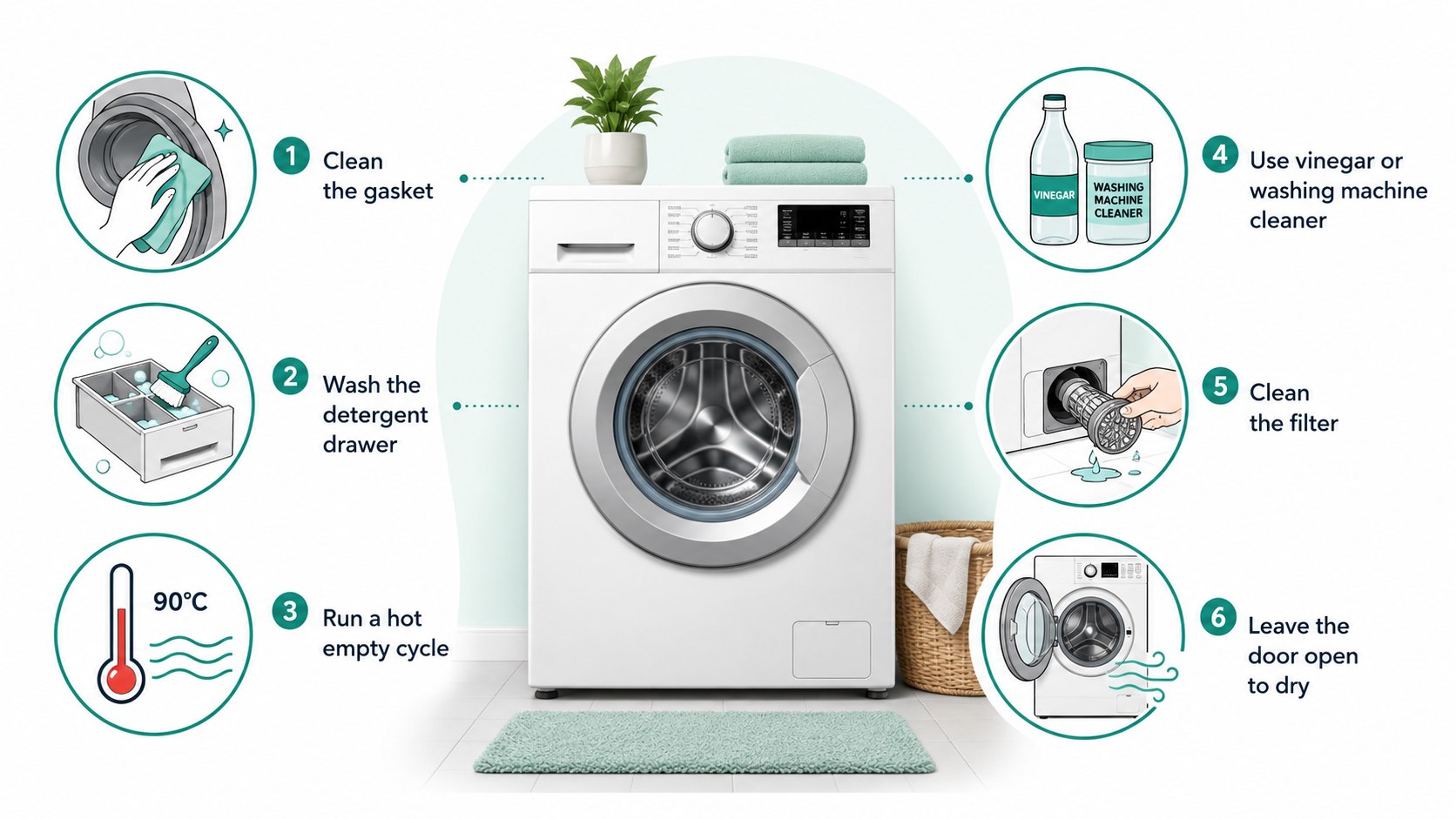
What you need
- 2 microfiber cloths and an old toothbrush or soft nylon brush;
- warm water and a small amount of mild dish soap;
- rubber gloves;
- a flashlight for inspecting gasket folds and the drum;
- a manufacturer-approved washer-cleaning tablet or powder;
- optional distilled white vinegar, only when the owner’s manual permits it;
- a shallow pan and towel for opening a front-loader pump filter;
- 45–90 minutes of hands-on time, plus the cleaning cycle;
- about $1–$4 per cleaning treatment in 2026.
Affresh, Tide, OxiClean, Active, and similar washer cleaners are widely sold in the United States. Depending on package size and retailer, washer-cleaning products commonly cost about $8–$20 in 2026. Verify the current price and compatibility before purchase.
Step 1: Identify the Type and Source of the Smell
Empty the washer and smell the drum, detergent drawer, gasket, and nearby drain separately. A musty odor usually indicates moisture and detergent buildup. A rotten-egg or sewage smell may come from the drain connection, while a hot electrical odor suggests a component problem.
Use a flashlight to inspect the folds of a front-loader’s rubber gasket. Look for hair, lint, coins, paper, pet fur, dark spotting, and standing water. In a top-loader, inspect beneath the agitator edge, around the bleach dispenser, and under the lid.
This inspection matters because cleaning the wrong area wastes time. The common mistake is assuming every odor begins inside the stainless-steel drum.
| Odor | Likely source | First action |
|---|---|---|
| Musty or damp | Gasket, detergent film, closed drum | Clean contact surfaces and run a maintenance cycle |
| Sour | Wet laundry or fabric-softener residue | Remove laundry and clean the dispenser |
| Sewage-like | Drain hose, standpipe, or plumbing trap | Inspect hose placement and contact a plumber if needed |
| Burning rubber | Belt, motor, trapped rubber item, or overloaded drum | Stop the washer and inspect before restarting |
| Electrical or smoky | Motor, wiring, control board, or outlet | Unplug the washer and arrange service |
Do not keep running a washer that smells electrical or produces smoke. Disconnect power without touching wet flooring. A persistent mechanical smell may indicate a slipping belt, blocked pump, failing bearing, or overheating motor.
For an older appliance, compare repair costs with its remaining service life. Baltimore Chronicle’s analysis of how long washing machines last in 2026 explains how age and maintenance affect that decision.
Step 2: Clean the Rubber Gasket and Door
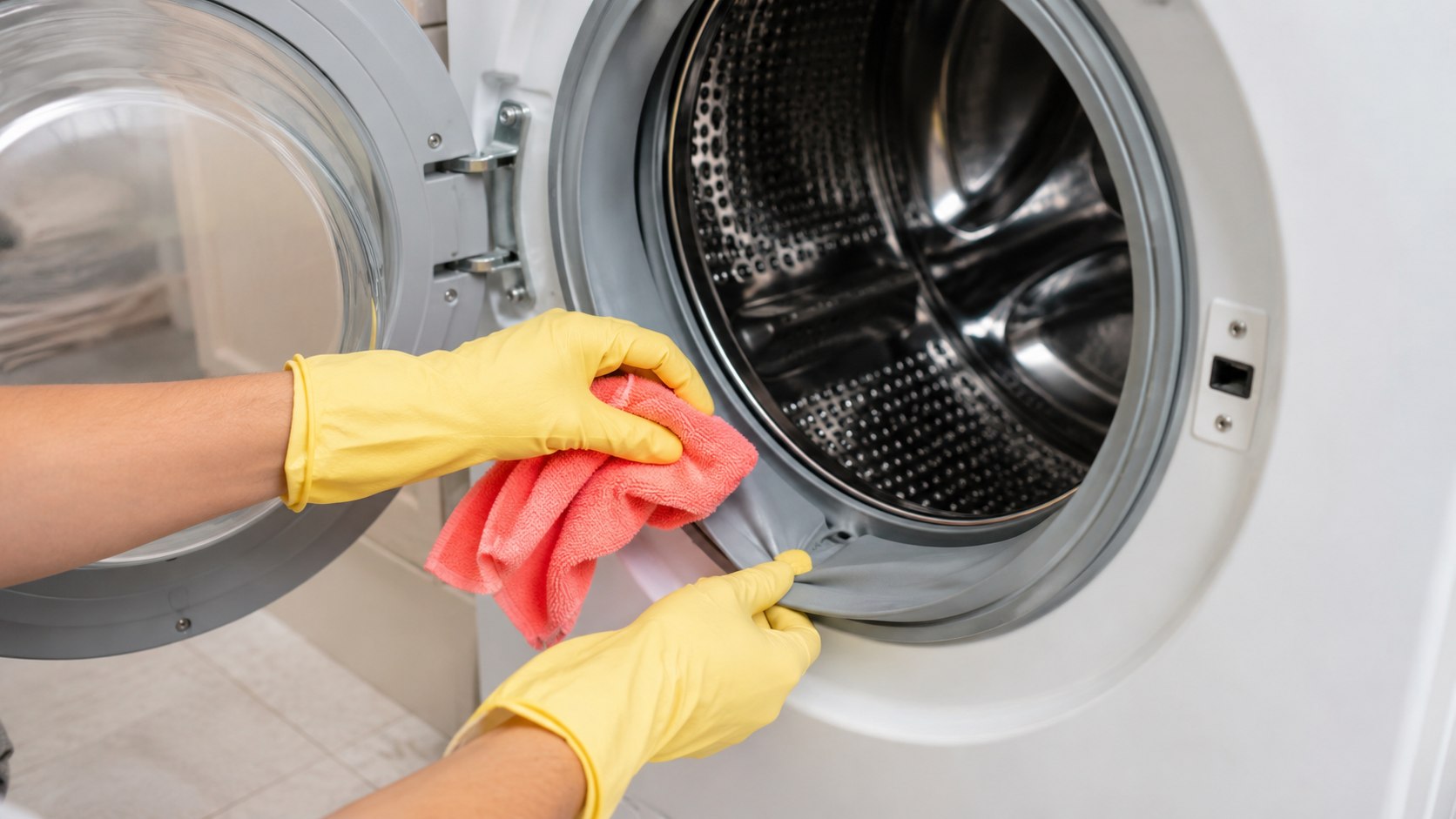
Pull the gasket back gently and remove visible objects by hand. Wipe each fold with warm, soapy water, then use a soft brush on sticky detergent residue. Dry the entire seal, including its lowest channel.
LG’s US support guidance says water remaining in the gasket can stagnate and begin to smell. The company recommends wiping the gasket and door dry when washing is finished for the day. This is especially relevant in humid states such as Florida, Louisiana, and Texas.
“Water left in gasket is normal, as there is no suction pump to remove water.”
LG Electronics USA, customer support guidance for front-load washer gasket odors, updated November 3, 2025.
Cleaning the seal matters because the drum cycle cannot scrub beneath folded rubber. Avoid sharp tools, abrasive pads, and aggressive pulling. A punctured or distorted gasket can cause a leak costing far more than a cleaning tablet.
Never mix vinegar and chlorine bleach. Their reaction can release toxic chlorine gas. Also avoid combining bleach with ammonia or unknown household cleaners.
Step 3: Wash the Detergent Drawer and Check the Filter
Remove the detergent drawer if the manual allows it. Soak it in warm water, brush the siphon caps and channels, then rinse and dry it. Wipe the empty drawer housing because residue often remains above or behind the removable tray.
Next, locate the pump-filter access panel on a front-loader. Place a towel and shallow pan beneath it because retained water may drain out. Open the emergency drain tube first when the machine provides one, then remove lint, buttons, hair, and other debris from the filter.
This step matters because stagnant water and organic debris can create an odor that survives repeated drum-cleaning cycles. The common mistake is opening the filter quickly without preparing for several cups of water.
A washer that smells clean immediately after a cycle but turns musty again within 24 hours often has residue outside the visible drum. The filter, dispenser housing, drain hose, and gasket channel deserve closer inspection.
Step 4: Choose Vinegar or a Washer-Cleaning Tablet
Check the owner’s manual before adding any cleaner. Whirlpool recommends its Clean Washer cycle with Affresh or liquid chlorine bleach on specified models. LG generally recommends a washing-machine tub cleaner and the model’s Tub Clean cycle.
Washer-cleaning tablets are the safer default when the package names your machine type. They dissolve during a long empty cycle and target detergent film inside the tub, pump, and internal channels. Follow the label rather than adding 2 tablets for a stronger treatment.
Distilled white vinegar can reduce light mineral film and odor on models whose manufacturers permit it. GE Appliances, for example, provides model-specific guidance that may allow diluted vinegar on gasket surfaces. Other manufacturers warn that repeated acid exposure may affect rubber components.
| Method | Best use | Typical 2026 cost | Main caution |
|---|---|---|---|
| Cleaning tablet | Routine drum and internal-system cleaning | $1–$4 per treatment | Use only the labeled quantity |
| Distilled white vinegar | Light odor or mineral film when approved | About $3–$7 per gallon | Frequent use may affect some seals and hoses |
| Liquid chlorine bleach | Manufacturer-approved sanitizing cycle | About $4–$10 per container | Never mix with vinegar, ammonia, or acids |
| Warm soapy water | Gasket, drawer, lid, and exterior surfaces | Usually already available | Do not flood electrical controls |
Prices vary by package, brand, and state. Affresh commonly appears in multi-treatment packs, while Tide washer cleaner is often sold as powder packets. Generic tablets may cost less, but their directions and machine compatibility still require review.
Avoid treating vinegar, bleach, and tablets as interchangeable. Each product has different chemistry and dosing requirements. More cleaner can create additional residue, oversudsing, or component damage rather than a cleaner washer.
Step 5: Run the Correct Empty Cleaning Cycle
Place the approved cleaner where its instructions specify. Some tablets go directly into the empty drum, while liquid bleach may belong in a marked dispenser. Select Tub Clean, Self Clean, Clean Washer, or the equivalent cycle.
If the machine lacks a dedicated program, consult its manual for the approved water temperature and cycle. Do not assume the hottest standard wash is suitable for every model. Never place clothing inside during a maintenance cycle.
The extended cycle matters because it uses a specific water level, temperature, tumbling pattern, or soak period. The common mistake is stopping the program early when foam or residue appears through the door.
Afterward, inspect the drum and gasket. Wipe away loosened grime, then run an extra rinse if cleaner residue remains or the product instructions require one. Leave the door and dispenser open until all surfaces dry.
Step 6: Prevent the Washing Machine Smell From Returning
Measure detergent according to load size, soil level, water hardness, and product directions. High-efficiency machines need HE detergent because standard detergent can create excessive suds and leave film inside low-water wash systems.
Whirlpool’s official guidance warns that excessive detergent can accelerate residue accumulation and create unwanted odors. Fabric softener can produce similar buildup, particularly when poured above the dispenser’s fill line.
- Remove wet laundry soon after the cycle ends.
- Wipe the front-loader gasket dry after the final load.
- Leave the door and dispenser slightly open when safe.
- Use the measured amount of HE detergent.
- Run the manufacturer-approved cleaning cycle about monthly.
- Clean the pump filter on the schedule listed in the manual.
- Wash pet bedding and heavily soiled items without overloading the drum.
- Inspect the drain hose after moving or reinstalling the washer.
These habits interrupt the moisture-and-residue cycle that causes most musty odors. Homes with children or pets should keep an open washer inaccessible, since an ajar door creates a safety concern. Use a manufacturer-approved venting feature or secure laundry-room access when necessary.
Humidity also matters. A basement laundry room in Maryland or Pennsylvania may dry more slowly than an air-conditioned utility room in Arizona. Improve airflow or use a dehumidifier when the room stays damp.
If odors return despite correct maintenance, inspect the drain installation. A hose inserted too deeply into a standpipe may contribute to siphoning or drainage problems on some machines. Plumbing odors may require a licensed plumber rather than an appliance cleaner.
Troubleshooting Persistent Washer Odors
- The smell returns after 1 day: clean the gasket channel, dispenser housing, pump filter, and drain hose rather than repeating only the drum cycle.
- Clean laundry smells sour: reduce detergent and softener, avoid overloading, and remove finished loads promptly.
- The washer smells like sewage: inspect the standpipe, plumbing trap, and drain-hose position. Contact a plumber if nearby drains also smell.
- Black marks remain on the gasket: follow the manufacturer’s mold-cleaning instructions. Replace a damaged seal when staining accompanies cracks or leaks.
- A burning smell appears: stop the machine, unplug it, and request service from LG, Samsung, Whirlpool, GE Appliances, Maytag, or the applicable manufacturer.
Do not repeatedly deodorize a washer that also leaks, fails to drain, overheats, or trips a breaker. Those symptoms point beyond routine cleaning. In 2026, an appliance diagnostic visit often costs roughly $75–$150 before parts and labor, although local rates vary considerably.
Renters should document leaks, electrical smells, and recurring drainage problems in writing. Cleaning removable residue is usually routine care, but gasket replacement, wiring work, and plumbing repairs may belong to the landlord under the lease and applicable state law.
FAQ About a Smelly Washing Machine
Why does my washing machine smell even after a cleaning cycle?
The cycle may have cleaned the tub but missed residue inside the gasket, dispenser, filter, or drain system. Manually clean those areas and verify that the washer drains completely.
Can I put vinegar directly into my washing machine?
Only when the appliance manual or manufacturer support guidance permits it. Use the specified amount and location. Never combine vinegar with chlorine bleach, and avoid frequent use when the manufacturer warns about rubber components.
Are washing-machine cleaning tablets better than vinegar?
Tablets are generally easier to dose and are formulated for washer-cleaning cycles. Vinegar may help with light odor or mineral film, but compatibility varies by brand and model.
How often should I clean a washing machine?
Monthly cleaning is a practical baseline for many households. Clean more often after frequent cold washes, pet-bedding loads, heavy softener use, or persistent humidity. Follow the maintenance reminder and manual for your model.
Should I leave the washing-machine door open?
Leaving it slightly open helps moisture escape when the room is secure. Households with small children or pets should use a safer manufacturer-approved ventilation feature or restrict laundry-room access.
When does a bad smell require professional repair?
Arrange service for burning, electrical, or hot-rubber odors. Professional help is also appropriate when the machine leaks, fails to drain, trips a breaker, or remains foul after the filter and drain installation are checked.
Earlier we wrote about Returning Amazon Orders at UPS Gets Confusing: How to Choose the Correct Drop-Off Method